
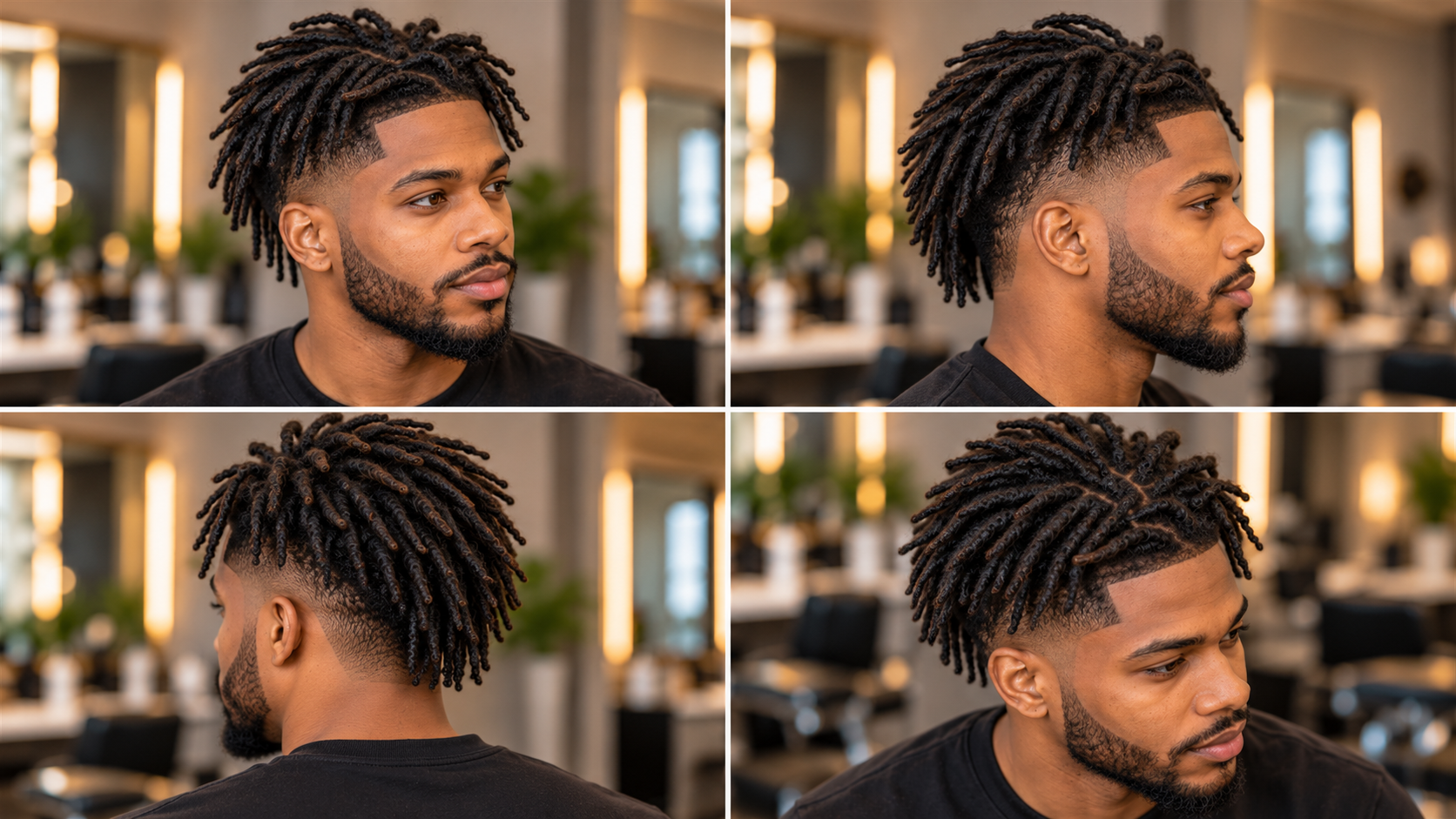

A mid taper fade with dreads gives your locs a defined frame without requiring a complete change to their length or character. The temples and neckline gradually shorten, while the locs remain the main feature. You can wear the result short and upright, loose around your face, or swept back.
The important decision is where the haircut stops. A taper should respect the sections supporting your locs. Taking the clippers too far into those sections can remove hair you intended to keep, especially around the front corners.
Before choosing a style, consider your loc length, maturity, preferred silhouette, and maintenance budget. A sharp lineup and a loose natural hairline create different looks, even when the taper placement stays the same.
This guide explains 15 variations, what to discuss with your barber, how pricing works, and how to maintain the haircut alongside your loc routine.
Table of Contents
- What Is a Mid Taper with Dreads?
- Is the Mid Taper with Dreads Trending?
- 15 Best Mid Taper with Dreads Styles
- How to Ask Your Barber for a Mid Taper with Dreads
- How Much Does a Mid Taper with Dreads Cost?
- Mid Taper with Dreads: DIY vs Barber
- How to Take Care of Dreads with a Mid Taper
- Is a Mid Taper with Dreads Office-Appropriate?
- FAQs About Mid Taper with Dreads
- Final Thoughts
What Is a Mid Taper with Dreads?
A mid taper with dreads combines locs with graduated shortening around the temples, sideburns, and neckline. The tapered areas sit higher or appear more prominent than a low taper, while fuller hair remains above them.
“Dreads,” “dreadlocks,” and “locs” are commonly used descriptions. Individual preferences differ, so use the term you are comfortable with when discussing your hair.
A mid taper fade with dreads is also different from a continuous mid fade. A taper usually concentrates the close work around specific perimeter areas. A full fade removes more coverage across the sides and back.
The shortest finish is another choice. You can request visible stubble, a soft shadow, or skin at the base. Mid placement does not automatically mean a bald finish.
For existing locs, establish which loose hairs belong to the loc sections before cutting. This is particularly important if you hope to increase side coverage later. Growing back a widened shaved area takes time, and its new growth will not immediately match established locs.
Is the Mid Taper with Dreads Trending?
The combination remains visible in current hairstyle guides and barber portfolios in 2026. Its appeal comes from flexibility: the taper can look understated, while the locs provide movement, volume, and personal expression.
However, current editorial coverage does not establish a national ranking or prove that it is the most requested haircut. Treat claims such as “the number-one loc style” cautiously unless supported by reliable booking or search data.
A mid taper with dreads is worth considering when it suits your existing hair and routine. Choose the placement because you like the result from different angles, rather than simply because a reference photo is popular.
15 Best Mid Taper with Dreads Styles
The following options describe different combinations of length, arrangement, and edge detail. They are starting points for a consultation, not fixed templates that every head of hair will reproduce.
Short dread styles with a mid taper fade
1. Short Dreads with Mid Taper
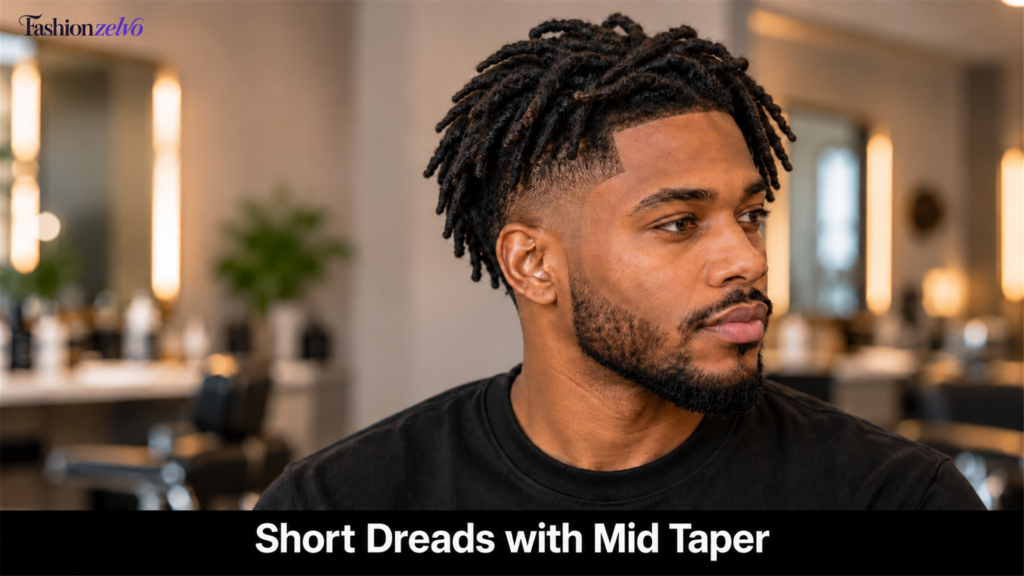
Short locs create a compact silhouette that leaves the temple taper easy to see. Depending on their length and maturity, they may stand upright, lean forward, or settle into small groups.
Keep enough coverage above the taper to support the outline you want. Removing too much from the sides can make a short top appear unexpectedly narrow.
Ask your barber to check both profiles. Different growth directions can make one side look fuller without requiring identical amounts of hair to be removed.
2. Dreads with Sharp Lineup
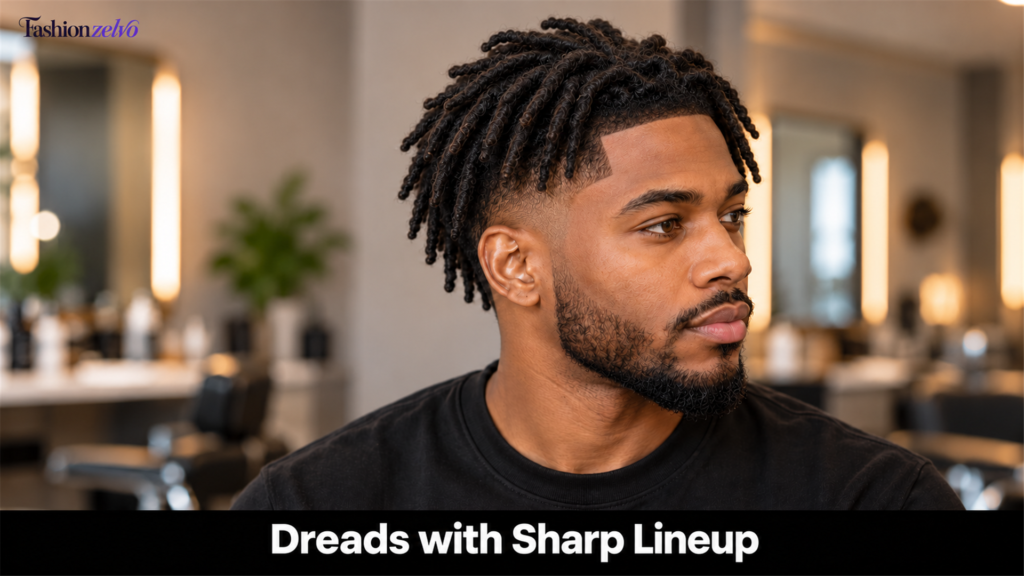
A sharp lineup adds definition across the forehead and temple corners. It can make the perimeter more prominent without changing the loc length.
The edge should follow the hair available. Chasing a perfectly straight line by repeatedly moving it backward can gradually enlarge the space between the forehead and front locs.
Specify whether you want a natural-looking edge or a more geometric finish. Also ask whether temporary enhancement products are included, since they can affect how the result appears after washing.
3. Thin Neat Dreads
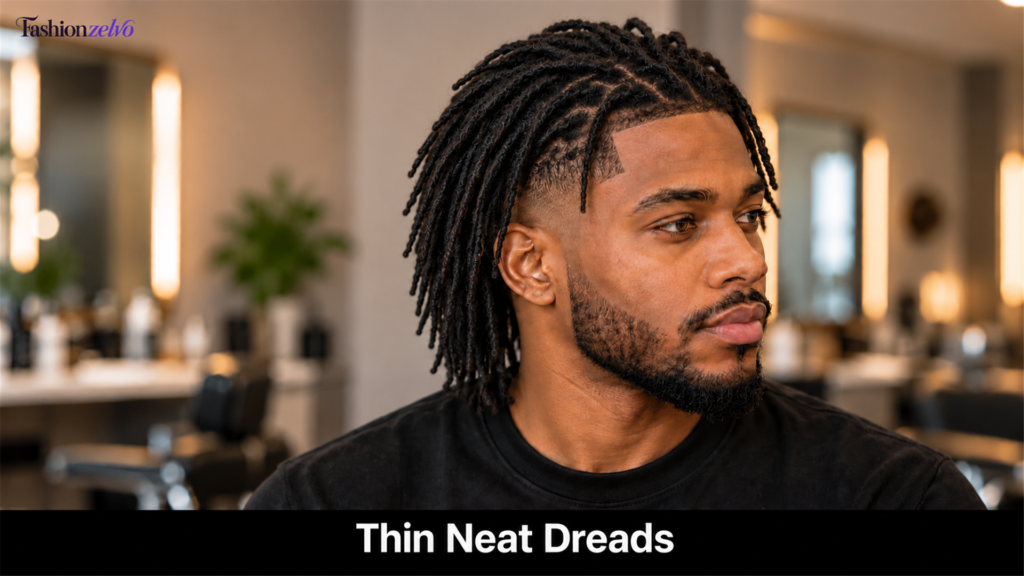
Slim locs create a detailed texture and can offer flexible movement as they grow. With a mid taper, the contrast comes from the fine sections above the closely blended temples.
Loc size should reflect your density and sectioning plan. Do not assume that making every section smaller will automatically produce a fuller-looking top.
If you already have established locs, discuss any proposed resizing with a loctician. A barber cleanup should not become an unplanned restructuring of your loc pattern.
4. Starter Twist Dreads
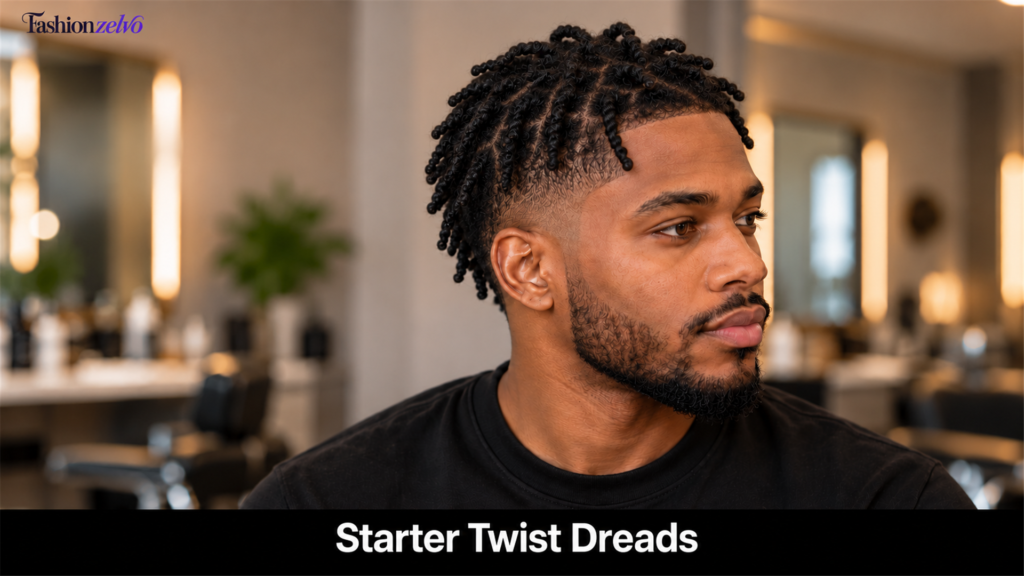
Two-strand twists or comb coils can be starting methods for a loc journey. Their fresh appearance differs from mature locs, so use references showing a similar stage.
A mid taper can define the perimeter while the top develops, but the cutting boundary needs particular care. Loose hair near a starter section may be part of its foundation.
Discuss the initial sectioning and taper together. This helps prevent a situation where one professional creates sections that another later clips into.
5. Sponge Twist Dreads

Sponge twists create small grouped sections on suitable short textured hair. They may form part of a semi-freeform approach, but freshly sponged twists are not automatically mature locs.
The taper provides a controlled edge around a less uniform top. Choose how much variation you want to keep instead of expecting every section to match.
Avoid repeatedly working the same areas simply to make the pattern look freshly defined. Ask a textured-hair specialist whether this starting approach suits your hair and long-term goal.
Medium and long dread styles
6. Medium Dreads with Mid Taper

Medium-length locs can sit around the forehead, ears, or upper neck, depending on their actual length and how they fall. They offer movement without requiring an updo.
Decide whether you want the taper visible when the locs are loose. Some arrangements naturally cover the temples.
Check the shape with your hair in its everyday position. A haircut judged only while the locs are clipped upward may look different once they settle around the face.
7. Long Dreads with Mid Taper
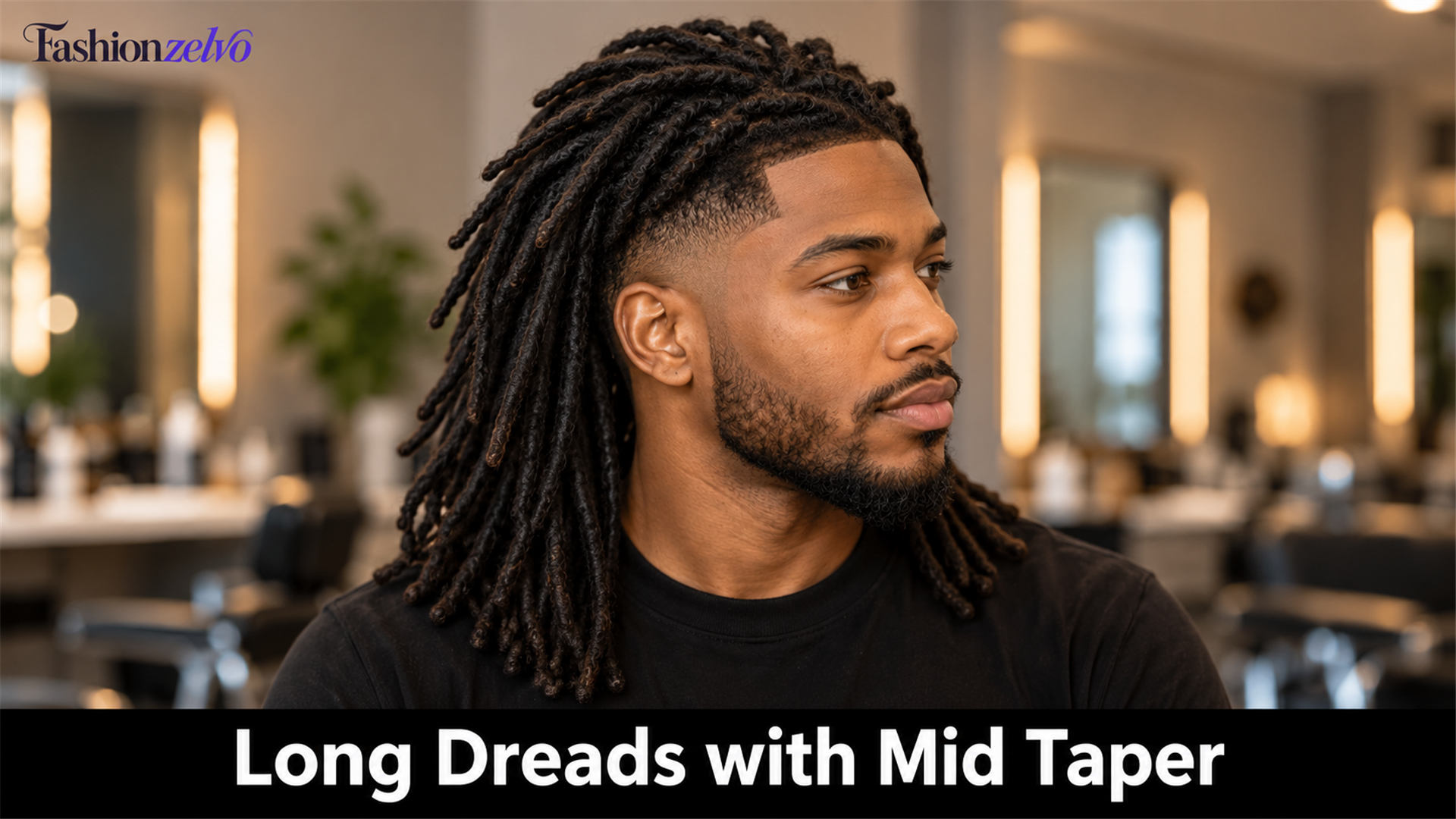
Long locs can be worn loose, moved over one shoulder, or gathered gently when needed. The taper becomes more visible whenever the sides are uncovered.
Consider the weight and comfort of your usual arrangement. Longer locs do not need to be pulled tightly backward to reveal the haircut.
Tell your barber that the appointment is for the perimeter only if you want all loc lengths preserved. Agree separately on any trimming of ends or reshaping.
8. Dreads with Tapered Neckline
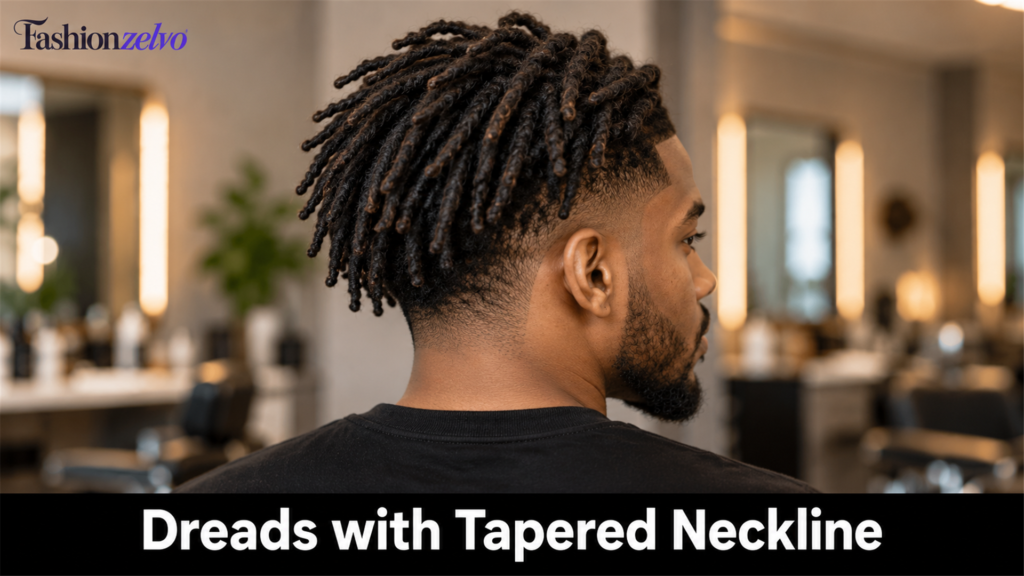
This variation puts particular attention on the nape. A gradual neckline can give the back a defined finish while the locs remain loose above it.
Ask to see the back using a second mirror or a clear photograph. Confirm how high the shortened area extends and whether any lower loc sections are close to it.
If you want to grow locs farther down the back later, discuss that plan before establishing a wide neckline taper.
9. Dreads in a Top Knot

A top knot exposes the temples and neckline, making the taper part of the overall silhouette. It works best when the locs can reach the gathering point comfortably.
Use a suitable tie and allow some flexibility at the roots. If short perimeter locs cannot reach, leave them out rather than forcing them into place.
A looser arrangement may look less severe while remaining practical. Check that the style feels comfortable when you turn your head or lower your chin.
Bold dread variations
10. Dreads with Connected Beard
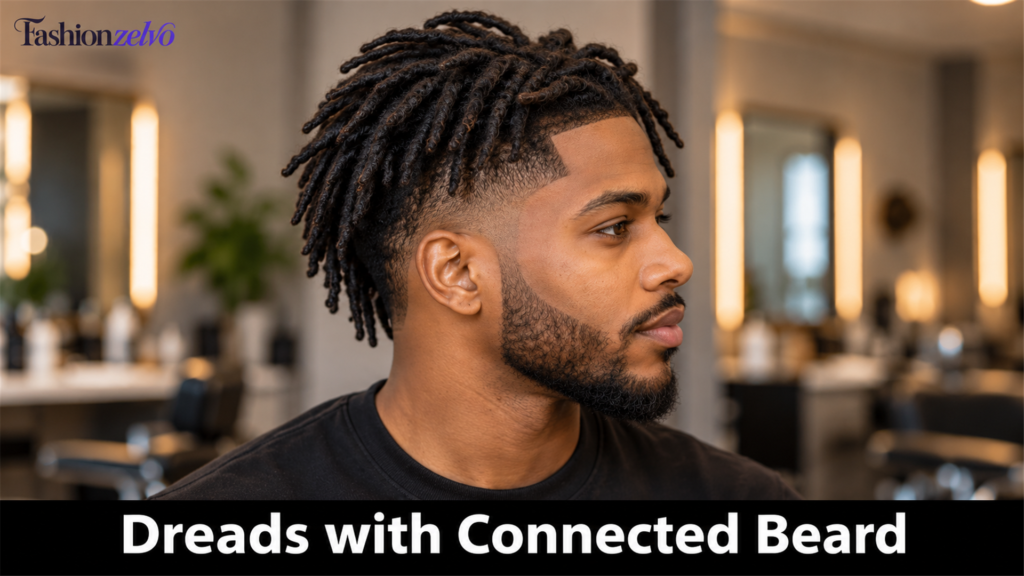
A connected beard variation coordinates the sideburn taper with facial hair. The transition can be gradual and subtle or more visibly separated.
Judge the beard and top together. A fuller beard changes the balance beneath the face, while a compact beard keeps more attention on the locs.
Ask which areas need maintenance between visits. You may want a beard outline refreshed without having the taper raised or the front hairline reshaped again.
11. Dreads with Line Design
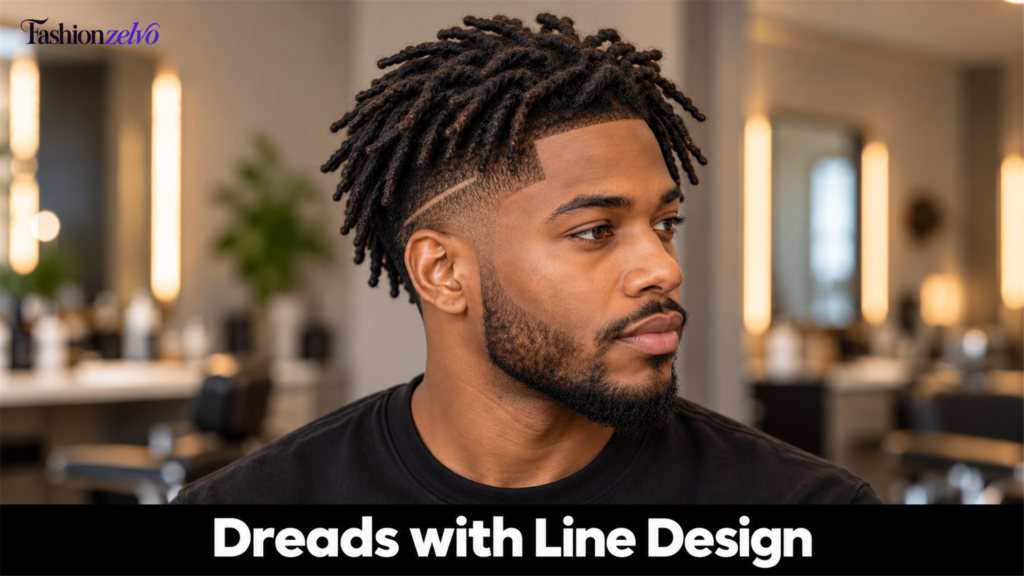
A shaved line adds a graphic detail within the short area. A single curve or restrained diagonal can provide definition without competing with the locs.
Keep the design within an agreed boundary. Expanding the shaved area to accommodate a larger pattern changes the haircut beyond the design itself.
Consider how it will grow out. A line that looks crisp immediately after cutting may become less distinct before the rest of the taper needs attention.
12. Blonde-Tipped Dreads
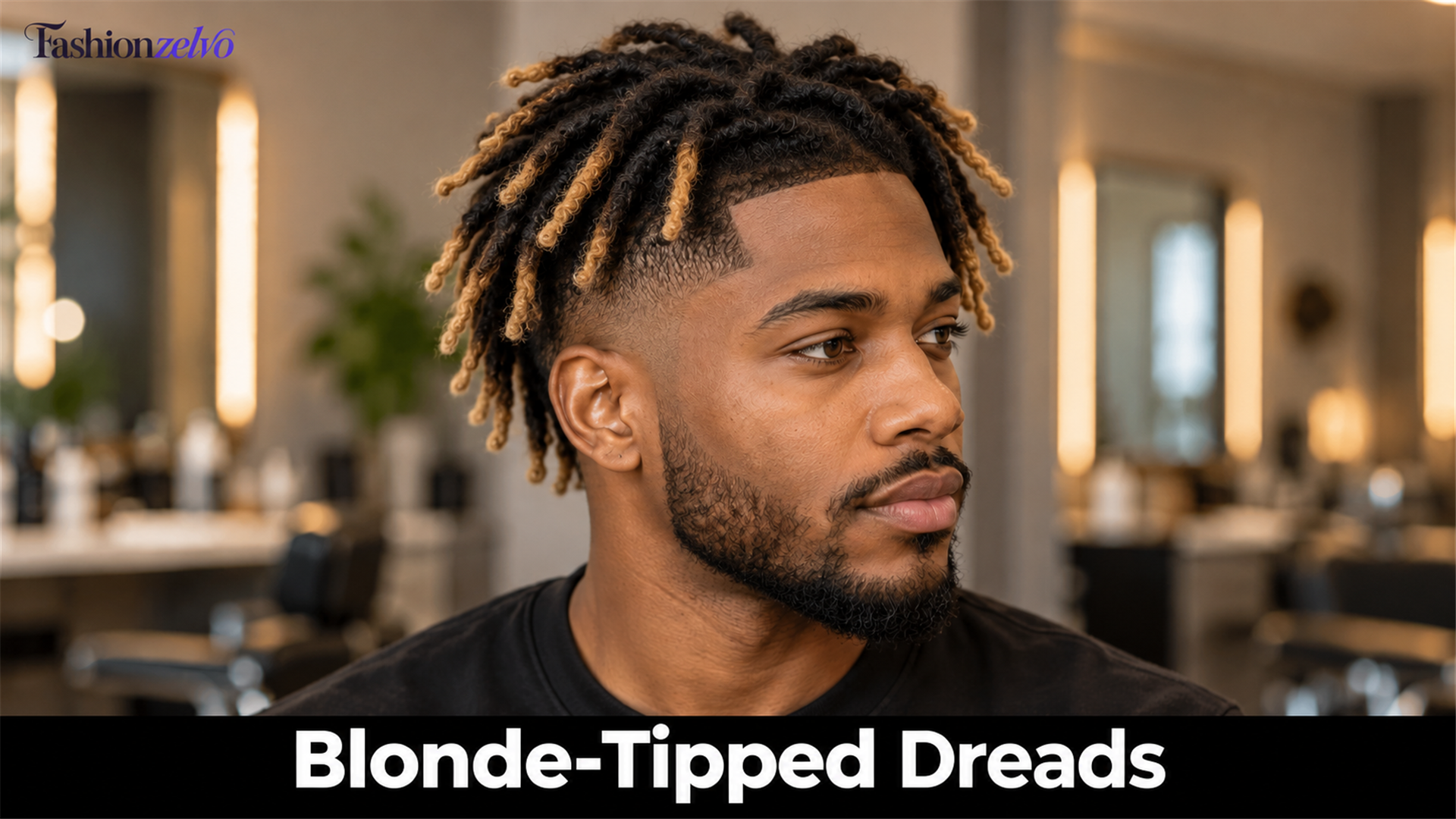
Blonde tips emphasize the ends of the locs while keeping a darker appearance near the scalp. The visible contrast changes depending on whether the hair is worn forward or tied back.
Consult a colorist familiar with locs before lightening. Existing color, hair condition, and previous treatments affect what can be achieved safely.
Bring references showing the amount of blonde you want, not just the shade. A few highlighted ends create a different effect from lightening most of every loc.
13. Thick Freeform Dreads
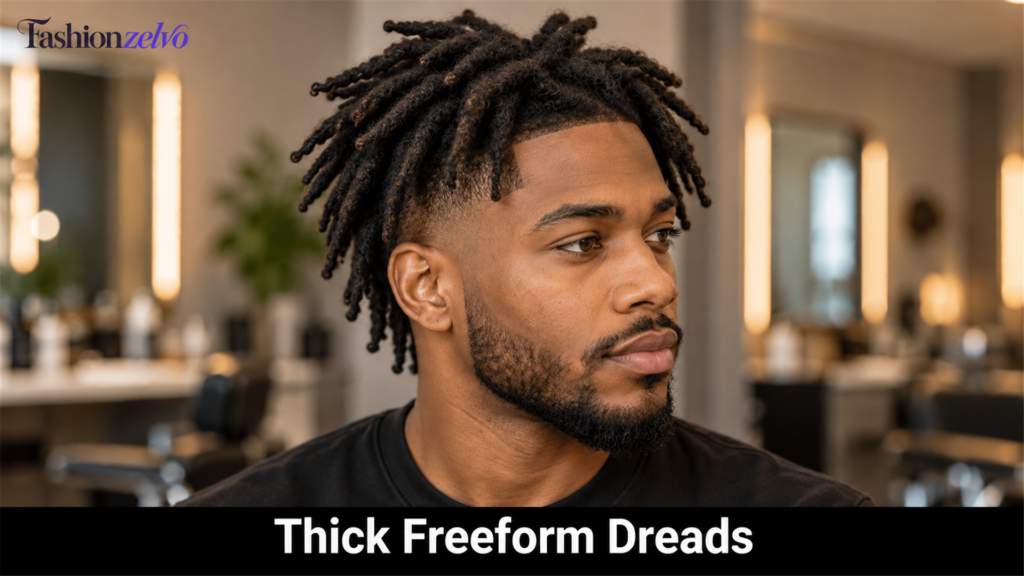
Thicker freeform locs create an irregular, expressive silhouette. A defined temple taper can frame that natural variation without making every section uniform.
Freeform does not mean that washing and scalp care stop. It describes an approach to formation rather than an absence of care.
Explain whether you want fully freeform growth or some separation and shaping. Avoid using someone else’s loc count as a target without considering your own hair density and established sections.
14. High-Top Dreads

High-top dreads concentrate the locs mainly across the top of the head, with a larger shortened area around them. A mid taper can refine the perimeter within that overall structure.
The high-top loc pattern and taper height are separate decisions. A mid taper does not require converting a full head of locs into a high-top arrangement.
If you are considering that conversion, discuss which locs would be removed and how the haircut would look when worn loose before committing.
15. Swept-Back Dreads

Swept-back locs open the face and show the temple work clearly. The arrangement can be loose and natural or supported by a comfortable, low-tension tie.
You need enough length for the locs to move backward without constant pulling. Short front sections can remain loose rather than being stretched into position.
Ask your barber to assess the front corners with your hair both forward and back. This helps establish a taper that works in more than one arrangement.
How to Ask Your Barber for a Mid Taper with Dreads
Describe what you want preserved before discussing what should be removed. Bring a side and back reference showing a similar loc arrangement, then identify the details you like.
A useful request is:
“I want a mid taper around the temples and neckline while keeping my loc sections and length. Please show me where the blend will stop, leave the roots untouched, and follow my natural hairline.”
Then settle these details:
- Taper boundary: Point to the highest area you are comfortable shortening.
- Shortest finish: Choose skin, stubble, or a softer shadow.
- Front edge: Confirm a natural hairline or restrained lineup.
- Loc sections: Identify roots and loose hair that should remain.
- Neckline: Agree on how much nape coverage stays.
- Beard or design: Price and discuss these additions separately.
If your locs are new or the section boundaries are unclear, consult your loctician before the haircut. A barber and loctician may handle different parts of the appointment.
Before leaving, inspect the haircut with your locs released. Check the temples, front corners, and nape rather than judging only the styled finish.
How Much Does a Mid Taper with Dreads Cost?
The price depends on location, barber experience, included services, and whether you are booking only the taper or loc maintenance as well.
For a practical example, Artistry Studio’s booking menu lists a line-and-taper service at $35, while FadezUniversity lists a loc-focused taper/fade package with additional finishing services at $45. These are individual business examples, not a national average or guaranteed quote. Artistry Studio service menu, FadezUniversity services.
Ask for an itemized quote covering:
- Taper or haircut.
- Lineup and beard work.
- Shampoo and drying.
- Retwist, retie, or other maintenance.
- Styling, designs, repairs, or color.
A combined appointment can cost considerably more than a perimeter cleanup. Loc count, length, maintenance method, and time since the previous service can affect the total.
Also consider frequency. A service costing $40 every three weeks would total about $693 annually before tips, assuming that schedule continues throughout the year. Your actual spending depends on how often you choose to return.
Mid Taper with Dreads: DIY vs Barber
A barber is usually the more practical choice for creating the initial taper or changing its height. The temple-to-loc boundary and back of the head are difficult to judge accurately on yourself.
At home, focus first on washing, drying, comfortable styling, and observing how the shape grows. Those tasks help maintain the overall result without changing the cutting boundary.
If you already have clipper experience, keep any cleanup within the existing short area. Secure locs away from the blades and avoid cutting hair whose role in a loc section is unclear.
Repeatedly raising one side to match the other can turn a small correction into a much wider haircut. If you notice an uneven blend, pause and have a barber assess it rather than continuing upward.
How to Take Care of Dreads with a Mid Taper
Keep scalp care, loc maintenance, and taper refreshes on separate schedules. A haircut losing its sharp outline does not mean your roots need retwisting.
Cleanse according to your scalp and routine. Choose a shampoo appropriate for your loc stage and rinse thoroughly. Ask your loctician how to wash starter sections without unnecessary disturbance; avoid postponing cleansing solely to preserve a freshly styled appearance.
Dry thoroughly after washing. Longer and denser locs can require more drying time than the surface suggests. Gently remove excess water and allow airflow between sections. Do not tightly bundle damp locs or cover them for bed before they have dried.
Keep products purposeful. Start with small amounts and watch for residue. Adding heavy layers to hide dryness, frizz, or flakes can make it harder to identify the underlying issue.
Choose maintenance for your loc method. Palm rolling, interlocking, crochet maintenance, and freeform approaches are not interchangeable. Get advice suited to your installation and root condition.
GetTwisted Hair Studios suggests approximately four to six weeks for starter-loc retwists and six to ten weeks for established locs. Treat these as salon guidance rather than a rule for every person; your loctician may recommend a different interval. GetTwisted loc aftercare.
Avoid unnecessary tension. A style should not cause pain or require you to tolerate pulling to keep it neat. The American Academy of Dermatology identifies tight locs and tightly pulled updos among styles that can cause traction alopecia. Persistent pain, stinging, crusting, or visible thinning deserves attention rather than another tight style. AAD guidance on hairstyles and hair loss.
Protect the perimeter. Ask your barber to maintain the agreed boundary during cleanups instead of gradually widening it. Take occasional photographs from consistent angles so changes are easier to notice.
Adapt nighttime protection. Use a comfortable covering that accommodates your locs without pulling them tightly together. Keep it clean and avoid fastening it over sensitive areas.
Is a Mid Taper with Dreads Office-Appropriate?
A mid taper with dreads can suit many office settings. Locs do not become professional only when paired with a fade; the taper is a styling preference.
For practical presentation, choose an arrangement that stays comfortable through your workday. Loose locs, a gentle sweep, or a low-tension updo can all work.
Check actual workplace requirements, particularly where equipment, hygiene, or visibility rules apply. Avoid assuming that an unusually tight bun or frequent skin-level cleanup is necessary to look presentable.
If you want an understated result, start with a soft taper finish and a natural hairline. You can request stronger definition at a later appointment.
FAQs About Mid Taper with Dreads
What Is a Mid Taper with Dreads?
It combines locs with graduated shortening around the temples and neckline at a mid placement. The loc sections and lengths can remain intact.
Will a Mid Taper with Dreads Suit My Face Shape?
It can be adapted through loc direction, retained coverage, and volume. Compare front and side views instead of choosing solely from a face-shape label.
What Should I Tell My Barber for a Mid Taper with Dreads?
Specify the taper boundary, shortest finish, and hairline treatment. Clearly identify the loc roots and length you want preserved.
How Much Does a Mid Taper with Dreads Cost in the US?
Individual menus reviewed list examples at $35 and $45 for different taper-related services. Request a local quote because inclusions and prices vary.
How Long Do Dreads Take to Lock?
Formation takes months, and maturity varies by texture and starting method. One Atlanta salon describes a six-to-eighteen-month range, rather than a guaranteed deadline. Chinny’s Flair loc timeline.
Can I Do a Mid Taper with Dreads at Home?
Experienced users may maintain an existing short perimeter. Creating a new taper near loc roots is better handled by someone who can assess the boundaries clearly.
How Often Should I Retwist My Dreads?
Follow guidance for your loc stage, method, and root condition. Do not retwist simply because your taper needs refreshing.
How Often Does the Taper Need a Cleanup?
Use two to four weeks as a flexible planning window, then adjust to growth and your preferred finish. A softer outline may remain acceptable longer.
Is a Mid Taper with Dreads Good for the Office?
Yes, it can fit many workplaces. Choose a comfortable arrangement and check any specific safety or dress requirements.
Do Dreads Damage Hair When Combined with a Fade?
The combination does not automatically cause damage. Tight styling and clipping into loc foundations are concerns, so preserve the roots and avoid painful tension.
Final Thoughts
A mid taper fade with dreads works best when the haircut supports the locs you want to keep. Decide on the boundary, finish, and everyday arrangement before choosing extra details.
Short locs, freeform shapes, top knots, and swept-back lengths can all use the same basic taper idea. Their differences come from sectioning, maturity, movement, and the amount of coverage retained.
Choose a barber who listens, involve your loctician when necessary, and keep cleanup appointments separate from root maintenance. A clear plan makes it easier to enjoy a defined perimeter while allowing your locs to develop in the direction you intended.

